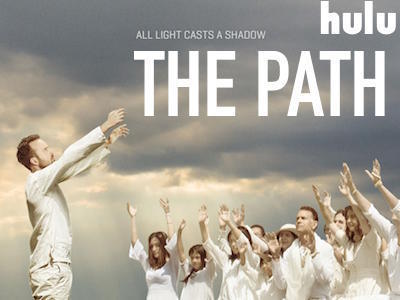
The Path was a Hulu television series which portrayed a fictional religion called Meyerism. It aired for three seasons, ending earlier this year, in 2018. I have watched all three seasons of The Path. In this show, the main character begins questioning his faith in Meyerism, as he envisions its leader dying, which turns out to be true. As I have learned more about Scientology, I began to make more connections to the similarities of the religion in The Path. This made me curious if others have also seen the similarities and what others think of the comparison. This blog post will be more of a personal look into the show and reflection of its appeal and similarities to Scientology.
While the creator of the show claims that the show has nothing to do with Scientology, there are many similarities that are not easily ignored. For example, Meyerism has rungs on a ladder which are very similar to the levels of Scientology. They practice the policy of disconnection. They have a similar tool to the e-meter. They have a term for non-believers, which is “IS” or ignorant systemites, similar to the Scientologist term “wog”. They have a similar isolated rehabilitation and detention center for those members who do not comply with their strict rules or who question their faith. Additionally, one may compare their leaders as both being “highly ambitious, shiny-toothed” and violent, referring to Miscavige not Hubbard. They both deny that they are a cult, which does not mean that either of them are, it only shows their similar difficulties involving the public reaction to their religion. They have similar security of their headquarters and they both do a sort of auditing session with members who are of a higher rank.
The most compelling and detailed similarity that I noticed was when I read about Miscavige allegedly finishing the church’s coursework, which is the basis of the religion, after Hubbard died. In The Path, their leader finished the sacred texts of Meyerism when their leader passed as well.
However, as Mike Rinder, former senior executive of the Church of Scientology points out, this could all be because “all fundamentalist movements/cults have similar trappings”. This show is more about the psychology of a cult-like religion than a direct play on Scientology, although Scientology could easily be a strong influence.
Some differences include the number of lawyers and publicity that the Church of Scientology accumulates. Also, Meyerism is much smaller and more hippie-like than Scientology, with all members being vegetarians and their meetings being in very rural places. There is no Sea Org comparable in Meyerism and no heavy reliance on celebrities joining the church. As the show progresses, the church becomes more prominent and more public which begins to make it more similar to Scientology in some aspects.
Mike Rinder explains the appeal of The Path in his blog post about the show:
“it is the best portrayal I have ever seen of the prison of the mind that entraps those in cults. It is extremely difficult to understand why people remain in a cult for anyone who has not experienced it themselves. This show portrays it accurately – the torment and anguish that those with doubts go through, the threat of losing loved ones, the deceit and false hope that everything will turn out to be true”.
I agree that this show is a great way to understand the mind of someone involved in a cult-like religion. This aspect was what made me personally very interested in the show and what drew me to the characters and story line.
Further Reading:
An interesting article explains the creator of The Path, Jessica Goldberg’s, reasoning for coming up with the show and the fictional religion.

 Religion of Science... or Science Fiction?
This is very interesting! I have not heard of this TV show, and your post makes me want to watch it to find the similarities you pointed out.
LikeLike